


100th Birthday Party: Designs for the Decades
Updated: May 12
To celebrate our centenary, 11 of our finest designers created extraordinary floral arrangements, translating their reflections on each decade into exquisite and deeply personal physical expressions.
Thank you, Barbara Baletti, for conceiving of this project, and spearheading it to success.
See also photographs of members and their significant others at the party held at the Montclair Museum of Art on April 27, 2026.
The 1920s — “Bold and Beautiful”

The era known as the “Roaring Twenties” was a time of dramatic economic, social, and cultural change. An economic boom and the mass production of cars and household appliances brought the rise of consumer culture. Prohibition led to bootlegging and “speakeasies.” Women won the right to vote. “Flappers” challenged traditional gender roles with new fashions, dancing, and bobbed hair. African American literature, art, and music were brought to the forefront by the Harlem Renaissance. My flower design was inspired by the opulent and bold Art Deco style of the time which featured dramatic, large-scale designs using clean, sharp lines. A key element was the use of soft romantic blooms with bold or unusual foliage.
— Fran Ackerly
The 1930s — “Softness and Grace”

The 1930s favored elegance, restraint, and a return to natural beauty in the decorative arts. Even during the hardships of the Great Depression, flowers brought warmth, color, and optimism into the home. Bouquets were not simply decorative — they reflected the era’s aesthetic, blending simplicity with everyday charm. Arrangements balanced the sleek influence of Art Deco with traditional craftsmanship. Unlike the rigid symmetry of earlier decades, bouquets embraced natural movement and negative space, allowing flowers to appear as they grow in nature. The classic English garden bouquet also returned in popularity, interpreted with a more structured artistic touch.
— Deborah Hirsch
The 1940s — “Triumph Over Tragedy”

The 1940s were a pivotal and traumatic decade for the world at large and particularly for my family. Both my parents lost most of their relatives during the Holocaust. My mother, Flory, a refugee from Yugoslavia, met and married my father, Harry, a US Army Master Sergeant, in Bari, Italy. She loved carnations. He loved tulips. The world struggled to regain normalcy, my parents began a new life in the US and embraced the future! This design is in honor of them.
— Betty Jagoda Murphy
The 1950s — “The Golden Decade"

1950s America was a time marked by post-war economic boom, a rise in suburban living, and a return to traditional family values. Though we didn’t live in suburbia, my parents did buy their first house as a young married couple in Brooklyn in the late 1950s. My mom, who was a traditional wife and mother, loved cooking and hosting family and friends for dinner parties and holidays. She would set her dining room table with her wedding china and would always have a centerpiece of beautiful flowers. My floral design is reminiscent of my mom and those happy times when life was good and prosperity abounded. It was the “golden age” for the middle class.
— Cynthia Corham-Aitken
The 1960s — “The Age of Aquarius”

The 1960s saw the rise of counterculture and the hippie movement which emphasized peace, love, and opposition to the Vietnam War. Young people revolted against social conformity, rejected materialism, and demanded more freedoms for women and minorities. Music, attitudes, and clothing changed. Women’s below-the-knee skirts gave rise to minis, GoGo boots replaced loafers, and jeans and long hair were trademarks for the younger generation of both women and men. My design is a tribute to the fashion of the day, the psychedelic GoGo look with a touch of daisies as an anti-war statement.
— Susan Benner
The 1970s — “Romance, Flair, and Music”
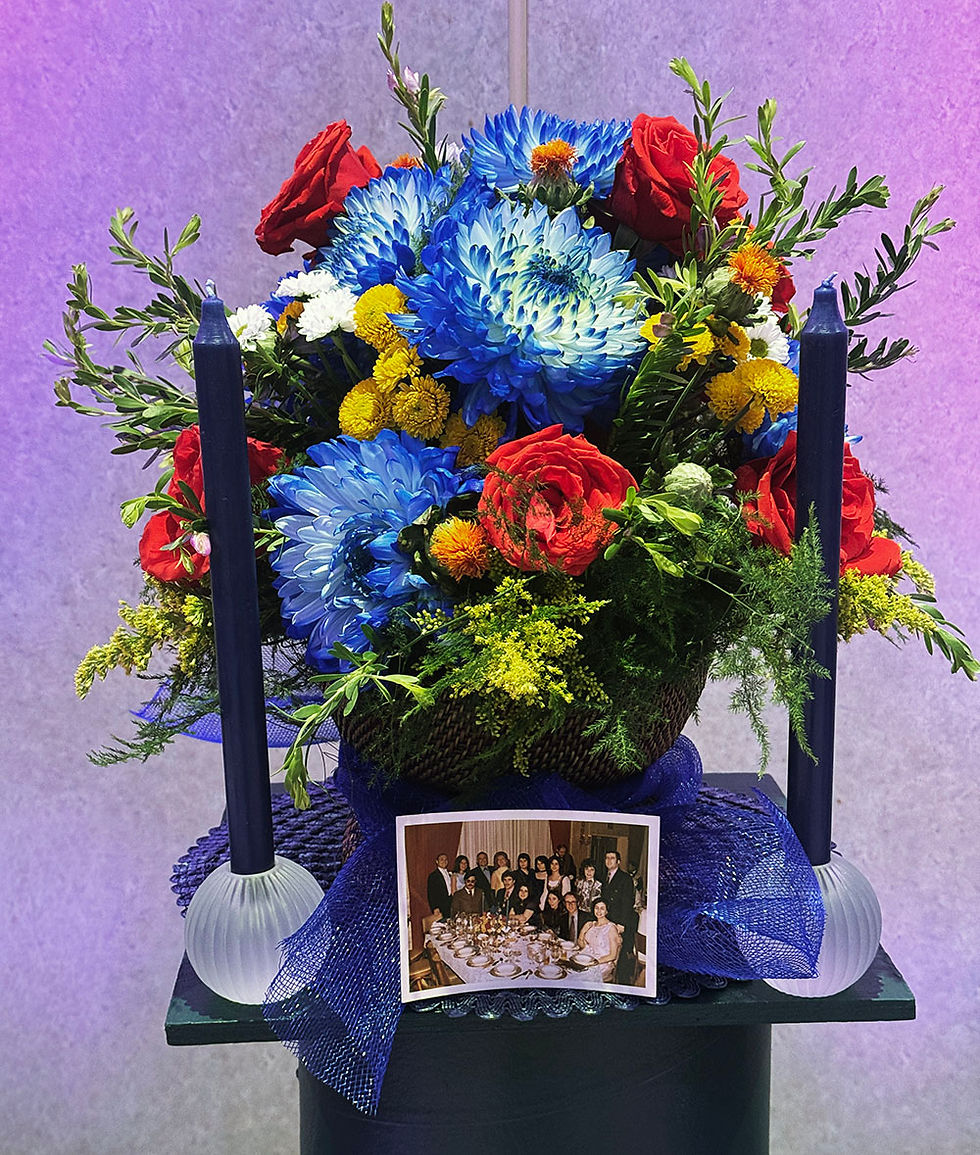
The 1970s in the U.S. were a time of introspection and vibrancy, blending uncertainty with bold self-expression. After the Vietnam War and the Watergate scandal, trust in institutions declined, but culture thrived. Disco’s frenetic nightlife, bell-bottom fashion, and iconic films like “The Godfather” and “Saturday Night Fever” defined the era. Weddings reflected a mix of romance and flair, with lush flowers like roses and carnations. Marc and I married in 1971, surrounded by a pale blue décor, blue and white roses, and many colorful flowers. Royal blue tapers sat on each table — more vibrant than typical earth tones of the era!
— Cheryl Slutzky
The 1980s — “Power, Glamour, and Excess”
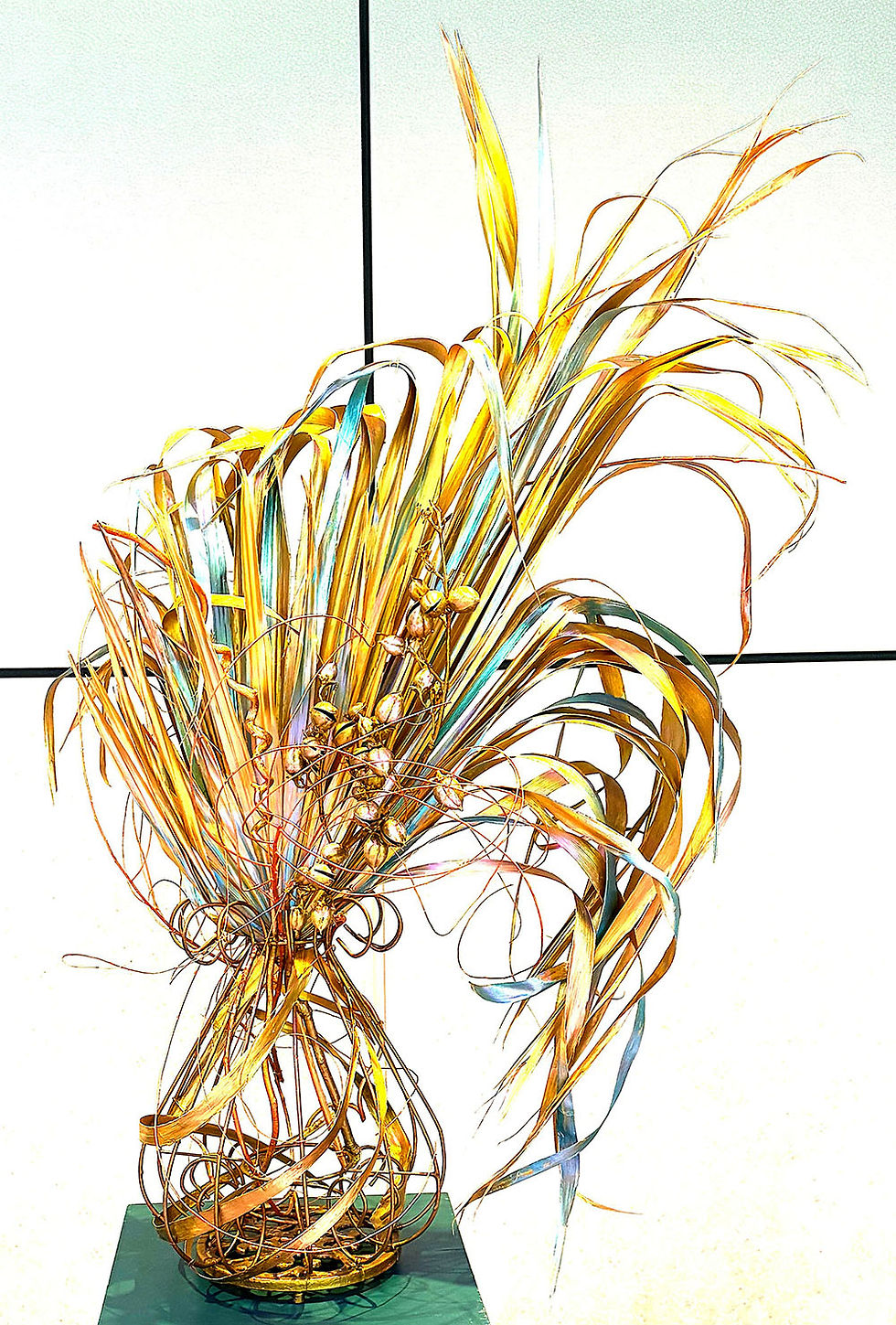
Nothing was understated about this decade — the 80s were all about power, glamour, and excess. Everything was bold and oversized, the bigger the better, and topped off with lavish bling and glitz. So I ransacked my garage for the biggest, splashiest, most over-the-top plant material I could find. The mood and colors were inspired by a photo of an iridescent 80s brocade evening gown, shimmering with pale threads of aqua, gold, and copper.
— Tova Narrett
The 1990s — "Love and Marriage"

The 90s were a decade of economic prosperity and cultural stability in America. The Cold War had finally ended and there was relative peace in the world. Americans spent more, the population trended upward, and with it so did marriage rates. Did you know that there were 2,443,000 marriages in the early 90s, the highest number since 1984? With that in mind we decided to create a “Marriage Bouquet” as our decade design to celebrate “Love and Marriage.”
— Barbara Baletti and Florence Leyssène
The 2000s — “The Purity and Hope of White"

The 2000s were a tumultuous decade. Our nation was enduring both economic and political crises yet experiencing a boom in technology. A seminal event that helped to temper national anxieties was the election of our first Black president who projected a vision of “Hope and Change” for America. I wanted to create a floral design that reflected a sense of purity and hope yet contained a quality of lushness and formality with an abundance of white flowers. What better way to convey this feeling than with roses, hydrangeas, and calla lilies?
— Susan Brady
The 2010s — “Creative Minimalism”

The 2010s were a decade when flower designs, strongly influenced by social media, moved away from rigid, dome-shaped bouquets toward more minimal designs that featured a mix of textures and greenery. Modern Minimalist and Line-Focused floral designs surfaced in the latter part of the decade, using less plant material and focusing on negative space and clean lines. The National Garden Club, while maintaining its Standards and Principles, responded to these shifts in the design movement and revised its 2017 Handbook to include more creative design types using less plant material. My exhibit features a Creative, not Traditional, minimal plant material design.
— Sarah Stransky
The 2020s — “Short and Sweet”

The second decade is witnessing a resurgence in the popularity of floral design in terrariums. First off, there is to be a wide variety of small succulents to choose from. Designers can let their creativity run wild. Chain stores such as Amazon provide prepackaged packs of soil, mosses and other growth media — everything one needs to get into terrarium gardening. Even our own Amy South even got into the fun when she owned “Moss and More”!
— Susan Straten
Thanks to all the Decades Designers. Your pieces are both masterful, meaningful, and beautiful!